What tourists don’t see: low season in Playa del Carmen
Playa del Carmen has two faces. The first is the one almost everyone knows: crowded beaches, busy restaurants, full hotels, streets packed with tourists, music, rushing around, photos, reservations and a city that never seems to sleep. The second is quieter, more local and, for many of us who live here, more real too: low season. It is not that Playa loses its charm. It simply turns down the volume. And when that happens, you begin to see how the city works from the inside.
Fewer tourists, more local life
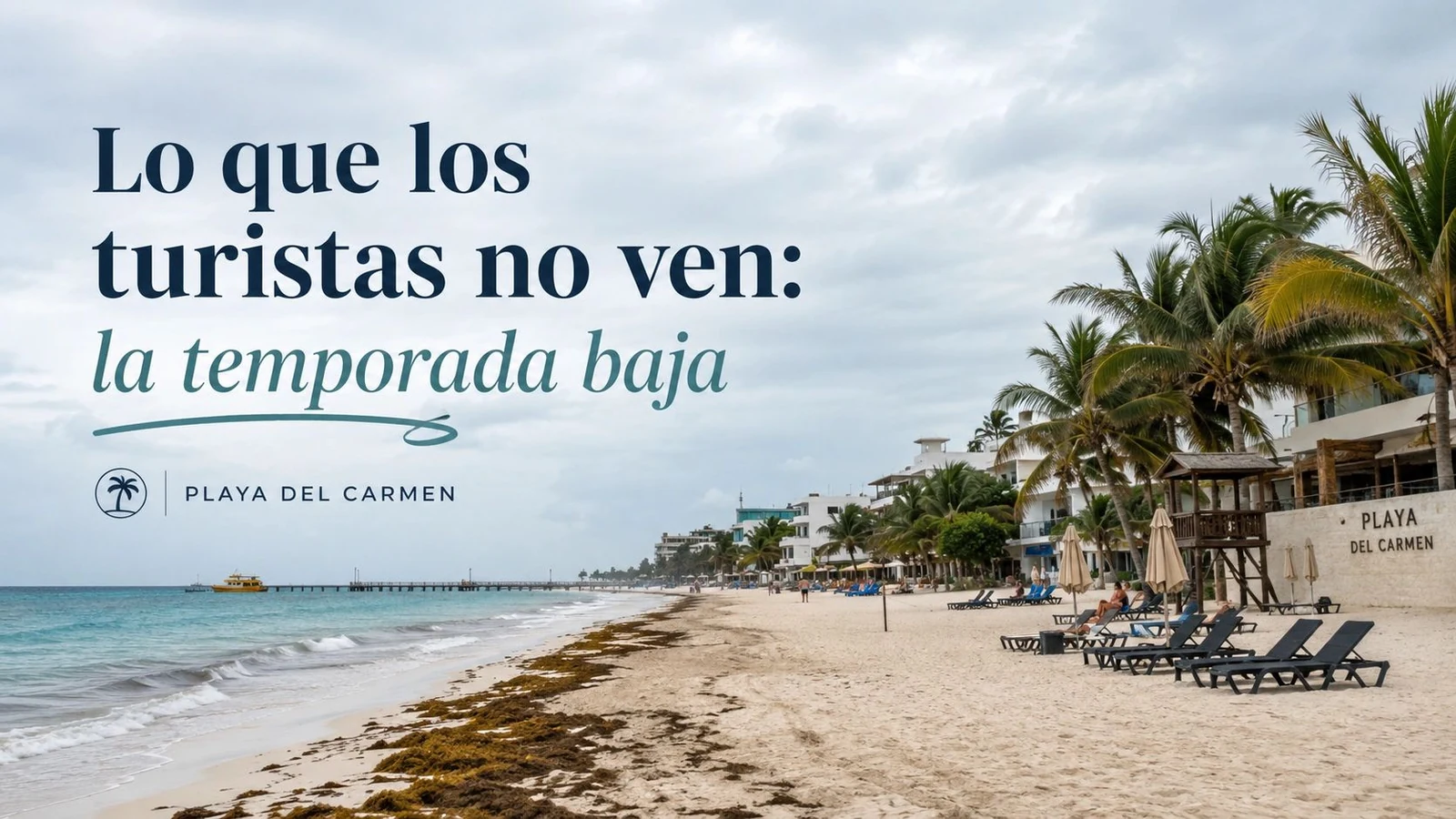
During low season, the streets feel different. There are fewer groups walking along Fifth Avenue, fewer lines, less tourist traffic and more room for those who live here year-round. To visitors, Playa may seem quieter and less lively. To residents, it is often a more comfortable Playa. This is the time when you can go to the beach without feeling as though you are stepping into an overcrowded postcard. Cenotes can be enjoyed at a more relaxed pace. Some places that seem designed only for tourists during high season once again feel within reach for those of us who live here. And that has its own charm too.
The city breathes differently
In recent years, Playa del Carmen has grown tremendously. More people, more cars, more construction, more movement. That growth brings opportunities, but it also makes daily life more demanding: more traffic, more time wasted, more noise and more pressure in certain areas. That is why, when low season arrives, many residents feel a kind of pause. Getting around the city becomes easier. Finding a parking space downtown no longer feels like an international mission. Going to certain places requires less patience. Playa becomes a little more ours, even if only for a few months.
It is also a test for businesses
For local businesses, low season is not simply a quiet period. It is also a test. Tourist numbers fall, customer flows change, and many activities that depend almost entirely on visitors feel the impact more sharply. Restaurants, tours, beach clubs, hotels, vacation rentals and tourist shops have to adjust their numbers, opening hours and expectations. That is where an important difference becomes clear: not every business experiences low season in the same way.
In our case, our cafés have a more residential profile. Of course we serve tourists, and we love welcoming them, but our most important base is the people who live the everyday life of Playa del Carmen: those who work here, take their children to school, stop for coffee before starting the day, and want a good breakfast without feeling as though they are paying vacation prices every day. Making a large part of what we sell ourselves, having our own production kitchen and operating three locations allows us to keep prices more accessible and better suited to real life in Playa. That does not eliminate the challenges of low season, but it does help us weather them better than a business designed exclusively for tourism. Selling to a tourist who is on vacation for a week is one thing. Earning the trust of a resident who comes back every day is something entirely different.
The best time to enjoy Playa at a slower pace
Low season also has advantages that are often overlooked. The beaches may be less crowded. Cenotes are more enjoyable. Some hotels and venues that are expensive or nearly inaccessible to many residents during high season begin to offer promotions, discounts and more appealing packages. For those who live here, this can be the ideal time to discover places that we put off until “someday” during high season. Often, that “someday” is low season. For people who enjoy activities such as fishing, certain times of year can also be especially good, as long as closed seasons, protected species and local rules are respected. Living in Playa does not mean only working near the Caribbean; it also means learning to live with its natural cycles.
Time to repair, organize and prepare
Low season is not a complete pause. For many businesses, it is the time to do what is almost impossible during high season. Small renovations are carried out. Pending repairs get done. Spaces are reorganized. Numbers are reviewed. Menus are adjusted. Ideas are put in order. The next season is planned. During high season, you run. During low season, you think. And although selling less is never comfortable, these months also make it possible to take decisions with greater clarity. What gets ignored during busy months usually comes to the surface when the city slows down.
It is not all negative
Talking about low season does not mean talking about a crisis, and I say this after more than 13 years in business. It means talking about reality. Playa del Carmen is not only the destination that appears on Instagram. It is a living city, with strong seasons and quieter ones, with businesses that endure, residents who adapt, and an economy that moves to the rhythm of tourism but also to the rhythm of those who live here all year. To tourists, low season may seem less spectacular. To residents, it is often the time when Playa becomes more livable. There is less rushing, less noise, less crowding and more space. And perhaps that is one of the greatest advantages of living here: understanding that Playa del Carmen is not enjoyable only when it is full. Sometimes, it is even more enjoyable when it can breathe.
The other Playa
Low season reveals a Playa that is less made up, but more honest. A Playa where local businesses prepare, residents reclaim spaces, the streets become lighter and everyday life returns to a different rhythm. Tourists usually see the shine of high season. But those of us who live here know that low season has value too. It does not always make for the best photo, but it often gives us the best version of the city.
A love note to Playa del Carmen
In the end, those of us who live here know that Playa del Carmen is not perfect. It has traffic, difficult seasons, intense heat, unexpected rain, sargassum, construction, change and all those details that do not always appear in the pretty pictures. But it also has something that draws you in. It has mornings that smell of coffee, streets that slowly come to life, people arriving from many parts of the world in search of a new opportunity, residents who keep believing in the city, and small businesses that continue to open their doors season after season. We live it every day. We see it at its busiest and in its quietest moments. We work in it, walk through it, struggle with it sometimes and enjoy it far more often. That is why, when we talk about low season, we are not complaining. We talk about it because it is part of Playa too. And perhaps loving a city means exactly that: not loving it only when it shines, but also when it slows down, lets its hair get a little messy and reminds us that there is real life behind paradise.
A.C.