Sargassum in Playa del Carmen in 2026: what’s really happening… and why your vacation can still be incredible
If you’re looking for up-to-date information about sargassum in Playa del Carmen, you’ve probably already seen alarming photos, dramatic headlines and comments along the lines of “don’t go to the Mexican Caribbean.”
Breathe. The reality is much more interesting—and far less apocalyptic—than it looks.
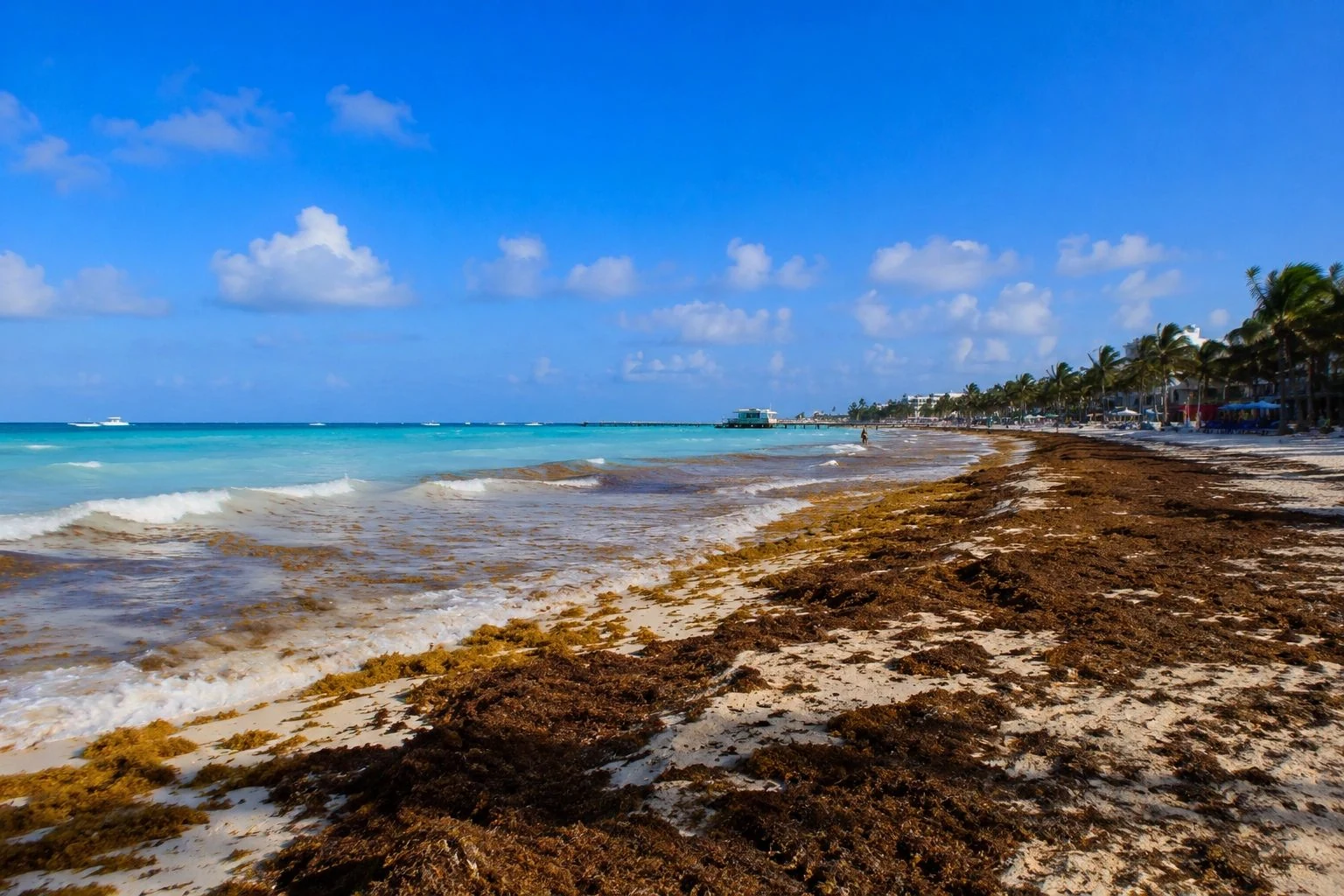
Yes, the 2026 sargassum season arrived early, and experts expect it to be one of the most intense years of the past decade. According to UNAM specialists, arrivals began as early as January and February this year, ahead of previous seasons. (El País)
But here comes the part many people leave out:
Playa del Carmen is so much more than just a beach
And that is exactly what makes this part of the Mexican Caribbean so special.
Because while some tourists obsess over live feeds of the sea, others are:
- swimming in crystal-clear cenotes,
- exploring Maya ruins,
- discovering picture-perfect islands,
- eating by the sea,
- having coffee in Playa del Carmen,
- getting to know the real Riviera Maya.
And honestly… that’s where the magic is.
Are there sargassum-free beaches near Playa del Carmen?
The short answer: yes, very often.
Ocean currents change constantly, and some areas have historically received far less sargassum.
Right now, places such as:
- Isla Mujeres
- Holbox
- Costa Mujeres
- some beaches in northern Cancún
- the west side of Cozumel
tend to stay much cleaner. (instagram.com)
Cancún has a “lifesaver side”
Many travelers don’t know this, but the beaches on the north and northwest side of Cancún usually look much better thanks to the coastline’s orientation and the ocean currents. Places such as Playa Langosta, Playa Caracol and Las Perlas often keep their clear water even during a heavy season. (Escapadas)
Islands where the Caribbean still looks unreal
Isla Mujeres
Playa Norte remains one of the most spectacular beaches in the Mexican Caribbean and usually has very little sargassum. Turquoise water, white sand and ridiculously beautiful sunsets. (Escapadas)
Holbox
Holbox looks like another planet. There is hardly any traffic, many streets are made of sand, and the vibe is completely relaxed. It also receives very little sargassum for much of the year thanks to its geographic location. (Escapadas)
Fun fact:
On certain dark nights you can see bioluminescence in Holbox, and whale sharks arrive between June and September. Yes, sharks… but calm, gigantic and absolutely stunning ones. (Wikipedia)
Cozumel
Here is an important travel trick:
the east side can get quite a lot of sargassum… but the west side normally stays much cleaner, with incredibly transparent water. (Escapadas)
Perfect for:
- snorkeling,
- diving,
- beach clubs,
- and photos that make your Instagram friends suffer.
Cenotes: the Riviera Maya’s real master plan
Now for the fun part.
Many tourists arrive thinking only about the beach… and end up falling in love with the cenotes.
Because there is nothing quite like them in many parts of the world.
The Riviera Maya sits above enormous underground freshwater systems, creating thousands of natural cenotes. (Wikipedia)
Cenote Jardín del Edén
One of the favorites near Playa del Carmen.
Crystal-clear water, jungle all around, and something many people love:
platforms for jumps of roughly 5 to 7 meters.
Yes, the classic:
“I’m just going to watch…”
…until you end up jumping like everyone else.
Great for:
- swimming,
- snorkeling,
- relaxing,
- and escaping the whole sargassum conversation.
Cenote Dos Ojos
If you want to feel as though you’ve stepped into another world, this place is spectacular.
Famous for:
- underground caverns,
- incredibly transparent water,
- naturally lit caves,
- and one of the Riviera Maya’s most famous underwater systems.
It literally looks like a movie.
Perfect for:
- snorkeling,
- photography,
- diving,
- and experiences with an extra “wow.”
And then there are the Maya ruins…
Because coming to Playa del Carmen without discovering any Maya culture… would be throwing away half the experience.
Chichén Itzá
Yes, it’s famous.
Yes, it’s worth it.
And not just because of the pyramid.
Maya engineering is still impressive even today:
- acoustics,
- astronomy,
- solar alignments,
- monumental architecture.
Cobá
The experience changes completely here.
Less touristy, more jungle, and much more adventurous.
Plus:
you can still explore vast areas surrounded by nature.
So… is Playa del Carmen worth visiting in 2026?
Absolutely.
Because Playa del Carmen is no longer just about “coming to the beach.”
It is:
- coffee and handmade breakfasts, with freshly baked bread
- cenotes,
- islands,
- Maya culture,
- food,
- snorkeling,
- diving,
- nature,
- nightlife,
- and that laid-back atmosphere that leaves so many people saying:
“I was only going to stay for a week…”
…and then looking for apartments on Facebook Marketplace.
Some honest advice
The Mexican Caribbean literally changes from one day to the next.
Some mornings the beaches are perfect.
Others bring more sargassum.
And on other days, the best plan turns out to be:
- having a relaxed breakfast,
- driving to a cenote,
- taking a ferry to an island,
- or discovering less touristy corners.
And that very mix is what makes the Riviera Maya unique.
Because there is always something incredible to do here. And don’t forget to bring your breakfast! Stop by and see us first!!! Ciaooo