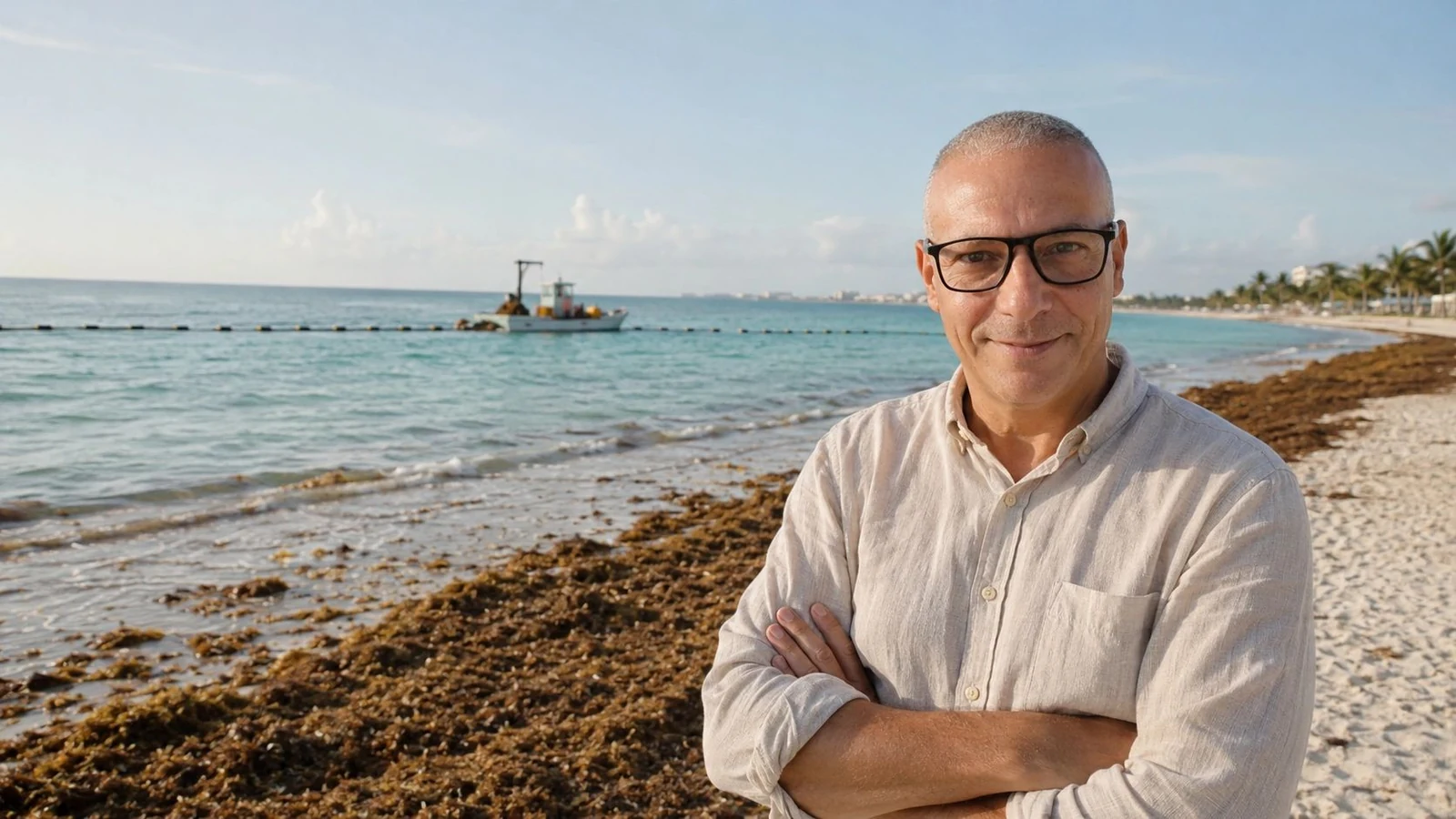
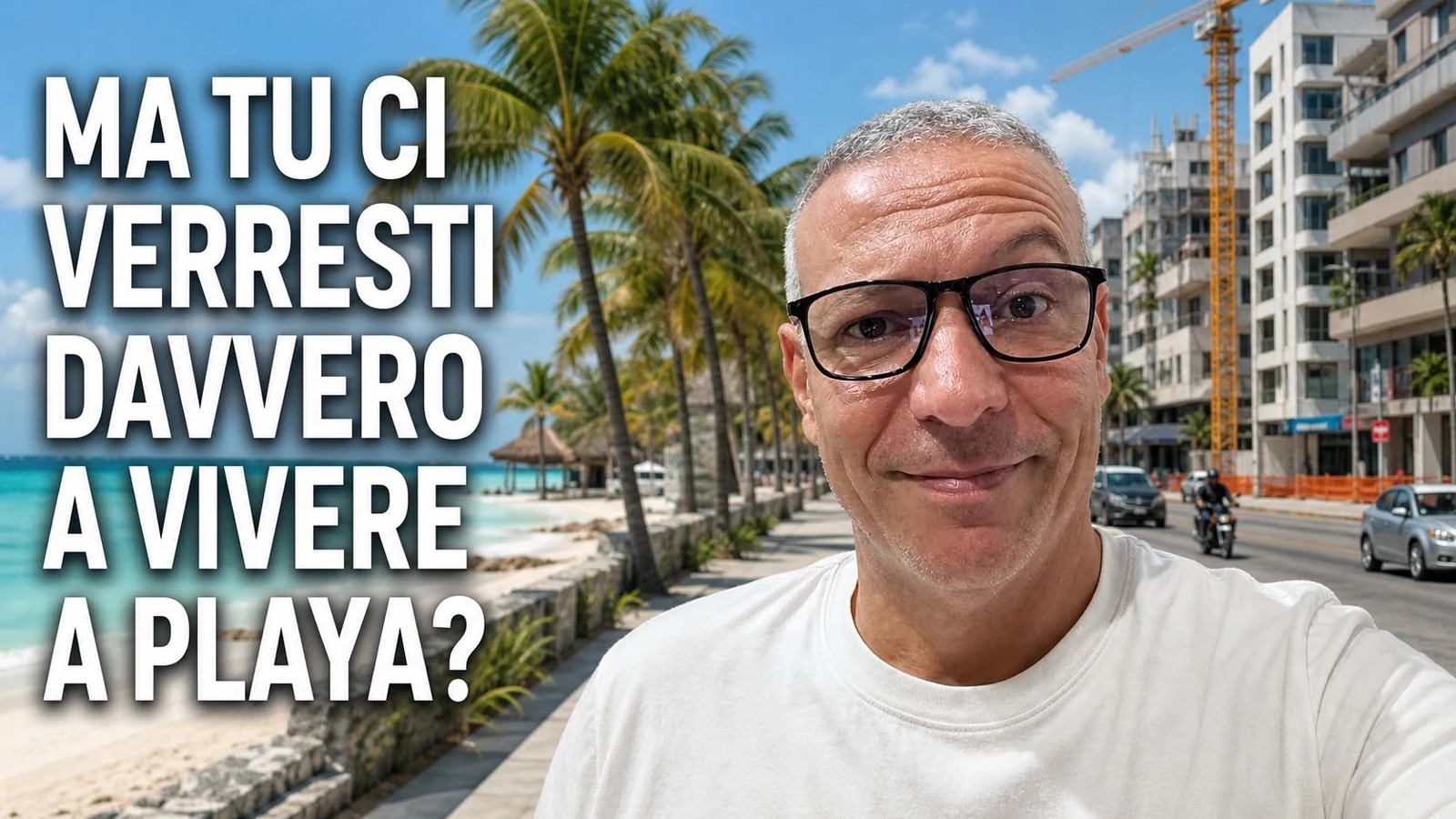
When we arrived in Playa del Carmen in 2013, we fell in love almost immediately.
It was a different Playa: smaller, more spontaneous, slower. There were no tall buildings, and nothing could rise above four stories. There was less traffic, less noise and that seaside-town feeling in which anything seemed possible: a simple life, the sea close by, days marked by the sun and the sense that we had found a place far away from everything. That Playa, however, largely no longer exists. Today Playa del Carmen is a real city: international, full of energy and opportunity. It has grown enormously and very quickly, bringing everything that comes with that growth: new neighborhoods, apartment buildings, traffic, construction sites, services and, naturally, new problems too. So before you start imagining a life made only of hammocks, palm trees and cocktails at sunset, I want to tell you not just about the wonderful parts, but also about the things that, as an Italian, you might find a little harder to digest. Because yes, Playa is easy to love. Living here is another matter.
The sea—the real one, not just the vacation version
The sea remains one of the main reasons to choose Playa. Having the Caribbean only a few minutes from home genuinely changes the way you live your days: you can walk on the beach after work, swim while people in Italy are pulling out their winter coats, and look up at a sky that always seems bigger. But the difference is not simply having the sea nearby; it is being able to enjoy it so easily. We have always made the most of it and, since our son has spent almost his entire life here, we try to go to the beach at least once a week, weather permitting. For him, the sea is not somewhere you travel to on vacation: it is part of everyday life. He loves freediving and spearfishing. He knows every rock, every reef and every stretch of coral. When we get into the water, I often feel he knows the seabed better than I know the streets in my own neighborhood. So if you do not like the sea, you can already start seriously scaling back the idea of moving to Playa. It would be a bit like moving to the mountains and complaining about the uphill climbs. If, on the other hand, you love the beach, swimming, fishing or activities such as freediving, kitesurfing, windsurfing and jet skiing, then living here can give you something that is very hard to find elsewhere.
Growing up in the middle of the world
Another great strength of Playa is its international character. Here you meet people from every corner of the world, hear different languages and constantly come into contact with cultures, customs and ways of thinking far removed from your own. If you are willing to put yourself out there, you can make new connections, launch a project or simply learn to see life from a different perspective. Growing up here, Gabriel learned to speak five languages. Switching from one to another feels natural to him, almost as natural as putting on a mask and fins. It is an enormous gift, one of those opportunities we could never have fully foreseen when we arrived in 2013. Living in such an international city forces you to open your mind. Sometimes your wallet too, especially when you discover the price of certain imported products—but we will get to that shortly.
The sunshine is wonderful. The humidity, a little less so
If you come from months of cold, rain and short days, living with sunshine for most of the year can spark a small revolution in your mood. You wake up, see the light, put on a T-shirt and you are ready. At least until you open the wardrobe and discover that the T-shirt has developed a life form of its own. The heat and humidity make themselves known. It is not unusual to pull clothes from the wardrobe and find them covered in mold. Homes need to be aired often and, during certain times of year, a dehumidifier is not a luxury: it is practically a member of the family. Then there is the tropical weather, which has a sense of humor all its own. You can leave the windows open in the morning because the sun is glorious, reach work and watch a storm begin. When you get home, you may find yourself practically underwater. Or the opposite can happen: where you are, it looks like the end of the world, while at your house, just three kilometers away, not a single drop has fallen. Here you do not check the forecast; you try to interpret it.
A certain lightness
Playa can also teach you to live a little more lightly. That does not mean everything is easy. It means that, over time, you learn to give less weight to what you cannot control, slow down and enjoy the present more. The problem is that the same philosophy also applies to the technician who was supposed to arrive at nine.
Playa is no longer a small town
One of the most common misconceptions is that Playa is still a little Caribbean town. It is not. Today it is a city that has grown enormously and quickly. That means traffic, construction sites, noise, neighborhoods that differ greatly from one another and a pace more intense than you might imagine from social media photos. The sea is always there, of course, but it is not enough to turn every day into a vacation. You can live a few minutes from the Caribbean and still spend half an hour stuck in traffic. The view improves, but a car horn is still a car horn. I lived in downtown Playa for seven years, and I have to admit I did not sleep well every night. Between parties, music and particularly creative neighbors, peace and quiet can become almost a utopia. If you choose to live downtown, everything is close by. Including the noise.
The cost of living is not what it used to be
Playa is not automatically cheap simply because you are in Mexico. Rents, especially in the most sought-after areas, have risen sharply. Restaurants, services and imported products can also weigh heavily on your budget. I believe ours is the only Italian café still offering reasonable prices and quality that truly respects tradition: a coffee with us costs about €1.70 and a cream-filled cornetto €2. We cater more to local residents than to a purely tourist crowd. If you want to live well, you need a steady income and a concrete plan—not only enthusiasm, flip-flops and good intentions. Many people ask me: how much money do you need to live well in Playa? You can find all the details in my previous article.
Another frequent question is: can you find work? Yes, you can, but wages are often low and many opportunities depend on the tourist season. Few jobs here are truly “forever.” Even so, there are Italians who have managed to establish themselves and succeed, including as employees. It is not impossible, but you need to arrive prepared and with realistic expectations.
Time follows its own rules here
Another thing you have to accept is that life in Playa requires a certain flexibility. Schedules, appointments, repairs, deliveries and bureaucracy do not always follow the precision you may be used to in Italy. Sometimes you have to insist, wait and always have a plan B. Preferably a plan C as well. If the technician says he will arrive at nine, do not assume he means nine on the dot. Sometimes he does not even mean that day. At first, it can drive you mad. Then you learn to ask: “Nine today, or nine in general?” The same principle applies at the supermarket. If there are only two people ahead of you at the checkout, it does not necessarily mean you will be outside in five minutes. The line may look short, but you do not yet know what awaits you: a price check, a barcode that will not scan, a card that will not work, an in-depth conversation or an administrative mystery involving three employees and a supervisor. So when you go in just to buy milk, do not schedule anything too close afterward. You may come out with the milk, a new philosophy of life and a completely different perception of time.
Public transport: inexpensive, but adventurous
Public transport perfectly captures Playa’s contradictions. It costs far less than in Italy and can be very useful. On the other hand, it requires more patience, adaptability and a certain spirit of adventure. Timetables are less predictable, comfort can vary and some journeys require careful planning. You save money, but invest time and energy. After a while, you learn to recognize the right vehicle, work out where to get off and interpret directions that, the first time, may sound like part of a treasure hunt. It works, costs little and often gets you where you need to go. As for “when,” it is best to keep an open mind.
Distance is not measured only in miles
At first, being on the other side of the world can feel exciting. You feel free, far from your routine and ready to build something new. Then the important moments arrive: a family celebration, a birthday, a difficult time or even a simple Sunday lunch. That is when you understand how heavy it feels not to be able to get there within a few hours.
Building a new network of friendships and genuine relationships takes time, and you do not always succeed. Playa is a city where many people arrive and many others leave again. You can meet an enormous number of people and still struggle to build deep bonds. I, for example, still speak every day with my friends in Rome. Here, on the other hand, I sometimes struggle even to send a simple “how are you?” That does not mean you cannot find real friends. It means you have to nurture those friendships, knowing that in such a dynamic city people can disappear from your daily life just as quickly as they entered it.
Christmas in flip-flops
And then there is Christmas.
Christmas in Playa is a thing of its own. There are decorations, events, dinners and music, but celebrating amid heat, palm trees and the sea is not the same as living through December in Italy. You can put lights on the tree, prepare a traditional dinner and play every Christmas song you want. But when it is thirty degrees outside and someone turns up in shorts, your Italian brain keeps wondering whether it is really Christmas or an August theme party. It can be wonderful, especially when you spend Christmas Day on the beach. But it is also one of the times when homesickness makes itself felt most strongly. You miss the cold, the atmosphere back home, your family and those traditions that you may have taken for granted while living in Italy.
So, would you really come and live here?
I probably would, because Playa has given us so much and still has something special. Here my son grew up speaking five languages and learned to love the sea. Those experiences are priceless and have helped shape the person he has become. But today I would come to Playa without idealizing it. I would no longer look for the little Caribbean town of 2013, because that Playa no longer exists. I would look for a lively, international and contradictory seaside city: sometimes beautiful, sometimes chaotic, and capable of testing even your patience when there are only two people ahead of you in line. Living in Playa can be wonderful if you arrive with your eyes open. The sea, sunshine, freedom and opportunities are real. But so are the traffic, humidity, noise, homesickness, cost of living and need to adapt. Perhaps that is exactly the point: Playa is not a perfect paradise. It is a place you have to get to know, accept and choose every day.
Preferably without leaving the windows open.